
How buyers pay for a franchise
SBA loans, retirement rollovers, home equity and partners, and how to get pre-qualified before you fall for a brand.
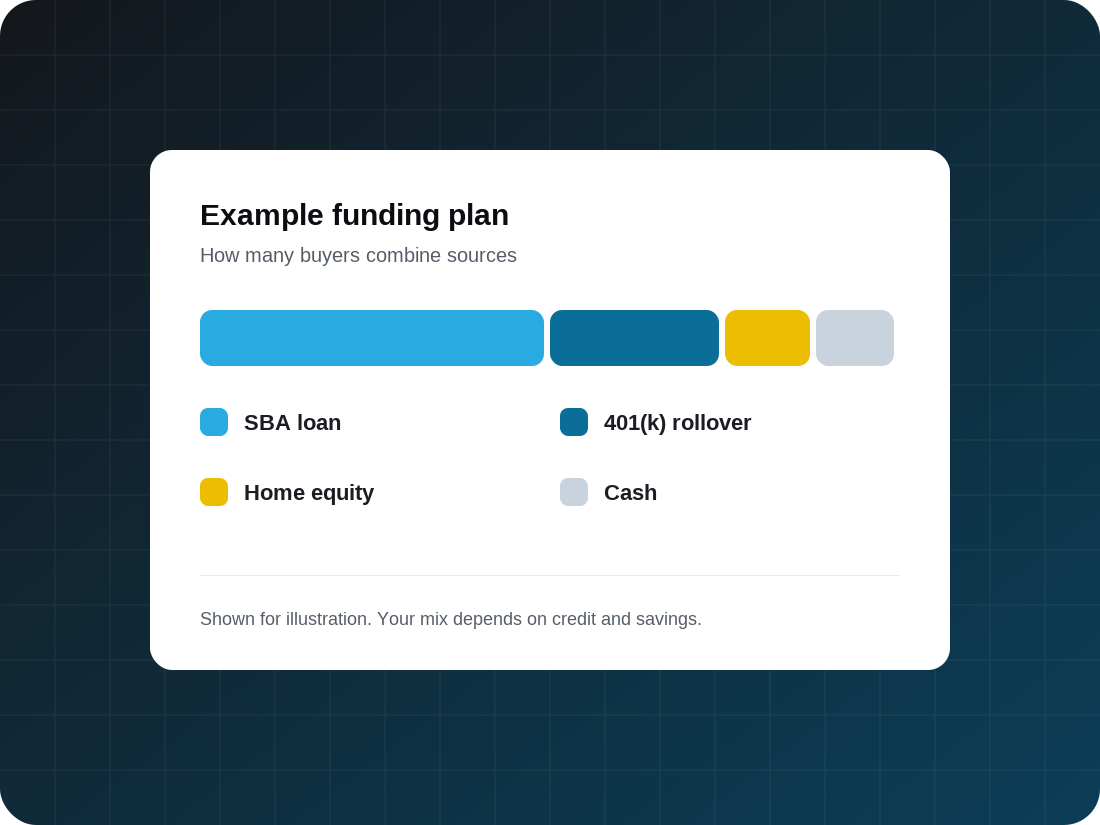
Most buyers finance part of their franchise. We map yours on day one.
How you’ll pay for it decides which brands make sense. So we start there, with lending partners who specialize in franchise purchases.
- SBA loansMost buyers finance part of the investment. We introduce lenders who know franchising.
- Retirement rollovers (ROBS)Use eligible retirement funds without early-withdrawal penalties, with specialist setup.
- Home equity & partnersEquity lines, family partners and investor partners, structured the right way.
- Get pre-qualified earlyKnow your real buying power before you fall for a brand.
Funding, step by step
You choose the lender. We make sure you see your options early, before you fall for a brand.
- 01Know your numberWe start with your cash, retirement savings, home equity and credit, so you know what you can comfortably invest before you look at a single brand.
- 02Get pre-qualifiedA franchise lending specialist reviews your situation and tells you which options fit: SBA loan, ROBS, equity, or a mix.
- 03Match brands to your budgetYour consultant only shows you brands whose total investment and liquidity requirements fit what you can actually fund.
- 04Close funding before you commitFunding is lined up alongside your due diligence, so you are not signing a franchise agreement you can’t pay for.
Seven ways buyers fund a franchise
Most buyers combine two or three of these. Your consultant and our lending partners help you find the mix that fits your cash, credit and timeline.
| Option | How it works | Your cash in | Typical timing | Watch out for |
|---|---|---|---|---|
| SBA 7(a) loan | A bank loan partly guaranteed by the U.S. Small Business Administration. The most common way buyers finance a franchise. | Usually 10% to 30% of the total project from you | About 30 to 90 days | Personal guarantee, and often a lien on your home if you have equity. |
| SBA Express | A faster SBA loan for smaller amounts, up to $500,000. | Similar to 7(a) | Often a few weeks | Lower maximum. Rates can be a little higher. |
| 401(k) rollover (ROBS) | Moves eligible retirement funds into your new company’s stock, so you invest them without early-withdrawal penalties or a loan. | None: the funds are the equity | About 3 to 4 weeks to set up | Setup and yearly plan fees, strict IRS rules, and you must work in the business. |
| Home equity line (HELOC) | Borrows against the equity in your home, often at a lower rate than a business loan. | Depends on your home equity | About 2 to 6 weeks | Your home is the collateral. |
| Equipment financing | A loan or lease secured by the vehicles, machines or fixtures you buy. | Often 0% to 20% | About 1 to 3 weeks | Covers equipment only, not fees or working capital. |
| Franchisor financing | Some franchisors finance part of the fee or equipment. Item 10 of the FDD says whether they do. | Varies by brand | At signing | Read the terms closely; not every brand offers it. |
| Partners or investors | Family, friends or an investor put in cash for a share of the business. | Varies | Varies | Put ownership, roles and exit terms in writing. |
Typical ranges, not quotes. Terms depend on the lender, your credit and the brand.
What lenders look at
Many SBA lenders look for about 680 or higher. Clean recent credit matters more than a perfect score.
Lenders want to see your own money in the deal, usually 10% to 30% of the total project.
Reserves left over after you fund the business show you can handle a slow start.
Management, sales or industry experience helps. The franchisor’s training also counts.
Projections built from the brand’s FDD and validated with current owners.
Lenders look at the system’s track record. Strong Item 20 numbers help your file.
Documents to gather now
Having these ready can save weeks once you pick a brand.
- Three years of personal tax returns
- A personal financial statement (assets and debts)
- Recent bank, brokerage and retirement statements
- Your resume, with management experience highlighted
- The franchise’s FDD and a draft franchise agreement
- A business plan with 3-year projections
- Government ID and, for some loans, a credit authorization
Funding questions
How much do I need to put down on a franchise?
Most lenders want 10% to 30% of the total project as your own cash, depending on the loan and your profile. A 401(k) rollover can provide that injection.
Can I use my 401(k) to buy a franchise?
Yes, through a ROBS (rollover for business startups). It lets you invest eligible retirement funds in your business without a loan or early-withdrawal penalty. It has setup costs and strict rules, so work with a ROBS specialist.
Can I finance the franchise fee?
Often yes. SBA loans can cover the franchise fee, build-out, equipment and working capital. Some franchisors also offer their own financing (see Item 10 of the FDD).
How long does an SBA loan take?
Typically 30 to 90 days from application to funding. SBA Express loans can be faster. Starting pre-qualification early keeps your timeline on track.
What credit score do I need for an SBA loan?
There is no official minimum, but many SBA lenders look for about 680 or higher. Lenders also weigh your cash, experience and the brand.
Can non-U.S. citizens get franchise financing?
SBA eligibility rules for non-citizens have tightened. Many international buyers use cash, home-country financing or non-SBA lenders. See our guide for international buyers.
General information, not financial or legal advice. Talk with a lender and a tax advisor about your situation.
You’re a good fit to work with us if…
Not there yet? Join the Buyer Academy free and start learning now.
- You have at least $50K in cash or liquid investments
- Your net worth is at least $150K, including home equity and retirement funds
- You’d like to be in business within about 12 months
- You want to make the decision with real data, not a sales pitch